Home / Interviews / Nancy Henderek
Nancy Henderek
Interview conducted 26 July 2015. Biographical details and references reflect that time.
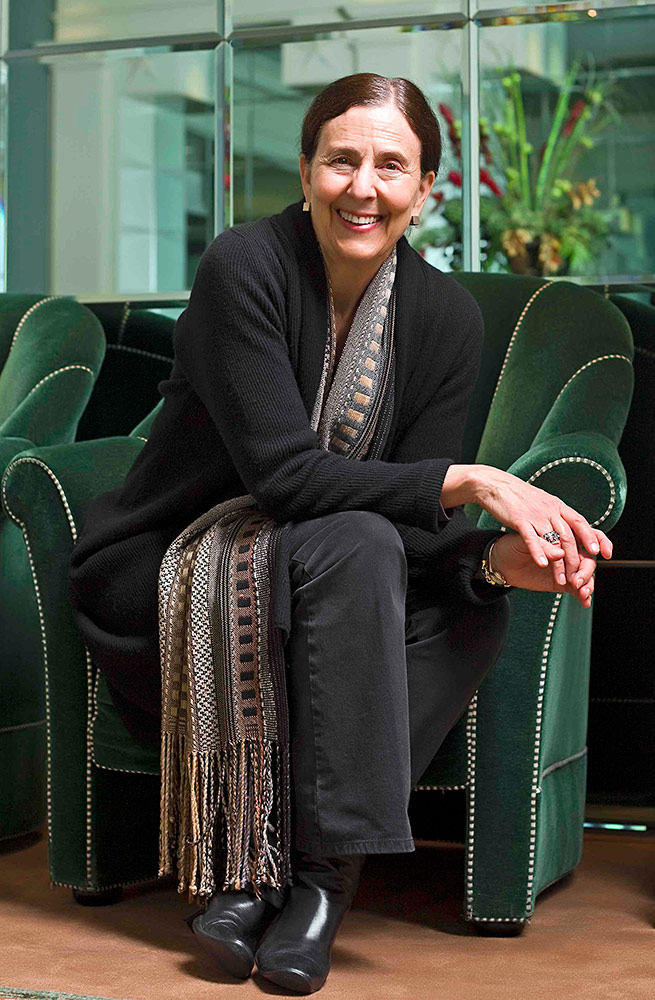
Photo: Erik Berg
Introduction
Nancy Henderek has worked as a dancer, choreographer, and educator in Sweden, Brussels, Houston, and Hong Kong. In Sweden, she performed with Marchant Dance Theater in Gothenburg, directed by Claude Marchant, a former member of the Katherine Dunham Company.
In Brussels, she taught at the International School, where she was also resident choreographer, and created works for several theatre companies. In Houston, she performed with Houston Grand Opera and taught dance at Episcopal High School and Houston Community College.
Nancy is the founder, producer, and director of Dance Salad Festival, an international dance festival presented in Houston at the Wortham Center. She first developed the concept in Brussels in 1992, producing three editions before bringing the festival to Houston. The festival brings together artists from different countries, cultures, and dance disciplines in a carefully curated program.
The conversation
When you were little, what did you want to be when you grew up?
I really didn’t know. I was willing to let things evolve.
I started ballet when I was three and a half, probably because of my mother. She was a painter and always loved dance. We lived outside Washington, D.C., and I remember seeing Maria Tallchief perform. She looked so magnificent and dynamic on stage. That must have had an effect on me.
But I never thought of dance as something I would do forever. I wasn’t particularly career-oriented. I was more interested in experiences.
I took a break as a teenager and eventually came back to dance. I also worked as a history teacher and pursued a master’s degree in counselling. Dance has been part of my life in different ways, and whenever I’ve had the opportunity to pursue it, I have.
Favorite things to eat?
Oh my goodness! I’m sitting on a beautiful Swedish island right now, enjoying wonderful fish. I love smoked salmon and herring. The Swedes must have at least 50 different ways of preparing herring!
I’m not a meat-eater, so I suppose you’d call me a pescatarian. Lots of vegetables and fish. Those are my favorite things.
What about your favorite books?
That’s such a big question! There have been so many important books throughout my life.
I was a history teacher, so I’ve always been interested in historical works. Some of the oldest stories, like The Iliad and The Odyssey, are among the most fascinating.
I also enjoy biographies, particularly of performers in theatre and dance, as well as novels and scientific books. My interests have changed and expanded over the years, so it’s impossible to choose just one favorite.
Favorite movies?
I love art-house films. One that particularly struck me was Angelina Jolie’s film about the war in Bosnia. I hadn’t expected that from her, and it broadened my understanding of who she was as an artist.
I would love to see more women given opportunities to direct films, dance companies, and major choreographic productions.
In dance, someone like Annabelle Lopez Ochoa is a wonderful example. We were among the first to present her work in the United States, and I’ve watched her career blossom internationally. She’s continued to create for companies around the world.
What is your favorite dance piece?
Oh my goodness! I can’t possibly answer that!
It’s like asking me to make Sophie’s Choice. I remember seeing that film when I had two young children, and the idea of having to choose between them was unimaginable.
Of course, choosing a favorite choreography isn’t a life-or-death decision, but that’s how impossible the question feels to me. There are simply too many works I love for different reasons.
I like dancers who…
Are themselves, who bring something deeply personal to a work, but who can also become what the choreography requires.
It’s a difficult balance. Some performers always seem to be themselves, whatever role they’re playing. Others can bring their own personality and experiences to a role while transforming into something entirely different.
I admire dancers who have that versatility. They need technique, of course, but also the ability to go deeper into themselves while, at the same time, forgetting themselves and becoming part of the work.
I am afraid of…
I don’t really think about fear in that way. Fear is something that happens in a particular moment, and what matters is how you respond to it.
For example, I swim every day when I’m in Sweden. Recently, I was stung by a jellyfish for the first time. It really hurt! Naturally, I was more cautious the next time I went into the water.
But I love swimming, and I wasn’t going to stop because of one painful experience.
I think the more interesting question is: when you’re faced with fear, how do you deal with it?
A dance piece should…
Have authenticity. Something about it has to reach me directly.
It might be the music, the movement, the feeling, or what the choreographer is trying to express. When I watch a piece, I know I’m interested when something makes me sit up, look more carefully, and listen more closely.
The best works transport me somewhere else. I stop feeling like an audience member watching from a distance and become completely absorbed in what’s happening on stage.
When that happens, I know I’ve encountered something special.
When you are not doing Dance Salad, what are you doing?
Well, today we took a long walk across this beautiful Swedish island, climbing over rocks, and then went swimming in the cold water.
I love swimming every day, even when the water is cold. When you get out, you feel so full of energy. It’s wonderful!
I love being in nature and spending time with my four grandchildren.
What’s one of the happiest moments in your life?
Again, that’s Sophie’s Choice! There are so many happy moments.
Artistically, I remember a Dance Salad Festival production that brought together three works in a special program with live music. It was a wonderful experience and made me extremely happy.
And, of course, having children and grandchildren brings countless moments of happiness. When you’re with young children, you enter their world. Suddenly, something as simple as watching ants on the pavement becomes fascinating again.
One of your most unusual experiences?
I think unusual experiences happen when you really pay attention.
You might be walking somewhere or thinking about something, and suddenly you notice something you’ve never seen before. You look deeper, or from a different perspective, and make a new discovery.
To me, that’s what makes an experience unusual: discovering something you didn’t know before.
What’s one of your coolest experiences?
It’s so interesting to me that people still use the word “cool.” It was cool to say “cool” when I was a teenager!
One of the most embarrassing experiences in your professional career?
Those are the ones we try to bury!
I’m sure I’ve had embarrassing moments, but apparently I’ve buried them so deeply that I can’t think of one right now. And perhaps that’s a good thing. If you’re still dwelling on an embarrassing experience, you’re probably thinking about it too much.
Who is the most influential person in your life?
There have been many, but Claude Marchant was particularly influential at a critical point in my life.
I danced with his company in Gothenburg, Sweden, after I’d had my two children. They were in school, and I began taking dance classes again. That eventually led me to work with Claude.
He had danced with Katherine Dunham and knew Alvin Ailey. What impressed me most was the incredible breadth of his choreography.
He could create a work inspired by a New Orleans funeral procession, then make something abstract, followed by a love story. He drew on so many different musical styles and theatrical traditions.
He taught me not to become locked into one kind of music or one way of making dance.
Looking back, I think his influence is reflected in the way I curate Dance Salad Festival. That openness to different styles and artistic expressions has stayed with me.
What’s one of the hardest things about what you do?
That’s an easy question: the visa process!
Bringing international dancers into the United States is incredibly difficult. There’s so much bureaucracy involved: petitions, lawyers, government paperwork, embassies, and endless phone calls.
I’ve had to contact embassies in the middle of the night, trying to understand why some dancers have received their visas while others haven’t. I’ve even contacted senators and members of Congress for help.
During Hillary Clinton’s time as Secretary of State, I found that certain procedures became easier, but overall, the process has grown increasingly complicated.
If I could concentrate entirely on the artistic side of Dance Salad, that would be wonderful. It’s the part I love. But producing an international festival means dealing with all these administrative challenges, and they take an enormous amount of time and energy.
If you could change anything in the dance world, what would it be?
I don’t think of it in terms of changing the dance world.
Dance is dynamic and constantly evolving. Every artist contributes their own blood, sweat, tears, and joy. I’m simply doing my part.
Through Dance Salad, I discover artists whose work interests me and bring them to Houston to share with audiences.
By exposing people to different kinds of dance, perhaps we influence one another. I know that being exposed to different artists and experiences has changed the course of my own life.
Is there something you still hope to achieve? Do you have a long-term goal?
Not really. My goal is simply to do the next festival, as long as I still want to and am able to do it.
Dance Salad has continued for many years, first in Brussels and then in Houston, but I never sat down and decided that I wanted to produce a festival for 20 years.
It’s something that has evolved naturally. Dance demands so much of you, and you continue doing it because it remains meaningful and fits into your life.
Once I decide to produce another festival, that becomes my goal.
If you could give one piece of advice to people who dream of doing what you do, what would it be?
Do people really dream of doing what I do? That’s interesting!
My career has evolved from dancing to teaching, choreography, and eventually producing Dance Salad Festival. None of it was part of a grand plan.
When I was teaching at the International School in Brussels, we had a wonderful theatre. I was choreographing school productions and also creating work independently.
I began thinking about how I could use that theatre to bring different dance artists together. I asked whether I could organize a dance program there, and they agreed.
That’s when Dance Salad came to mind. I liked the name because it suggested a mixture of different things. But a name is only as good as what you do under it.
I saw an opportunity, imagined what might be possible, and decided to try it. When the first festival worked, I thought, “Well, let’s try another one.”
That’s really how it all began.
About the writer
Read more about Armando and explore his contributions to the journal.
More interviews to explore.