Home / Interviews / Isaac Spencer
Isaac Spencer
Interview conducted 1 July 2015. Biographical details and references reflect that time.
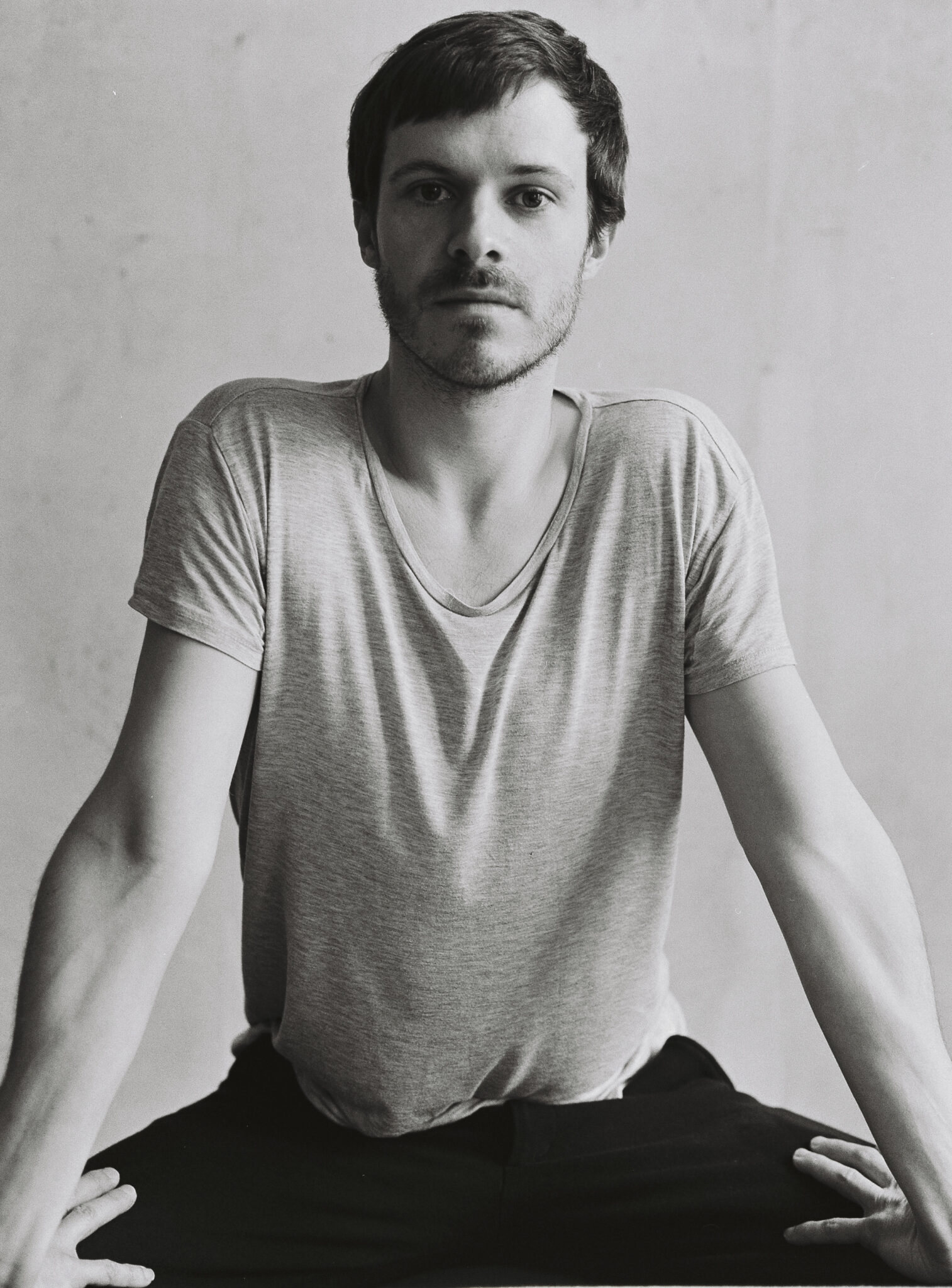
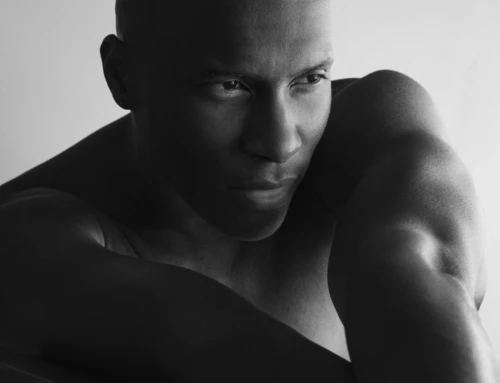
Photo: Luis Alberto Rodriguez
Introduction
Born 1982 in the USA, Isaac is a freelance dance artist based in Stockholm and Dresden. He began his dance training with Joan Sheary, graduated from Walnut Hill School (2000) and earned a Bachelor of Fine Arts from the Juilliard School (2000-04). Isaac was the recipient of the Princess Grace Award for modern dance (2003). He was a member of Hubbard Street Dance Chicago (2004-06), Cullberg Ballet (2006- 2015), and GöteborgsOperans Danskompani (2013-14). As a freelance artist, Isaac has been working with Rumpus Room Dance and Rachel Tess Dance in Portland, Oregon, and most frequently with Sebastian Matthias (2010-present). He has served as a teacher and mentor for students at the Ballet Academy in Stockholm and continues to teach dance and lead workshops throughout Scandinavia, Germany, Switzerland, and the United States.
Isaac will be performing in the guts company´s production Das Fremde/ ALIENIdentität in 2016.
The conversation
When you were little what did you want to be when you grew up?
My first memory of kind of knowing what I wanted to do was a dancer actually. To be honest I never had this «Oh I wanna be a doctor, or I wanna be a teacher». I kind of just listened when other people said those things and then when I realized I liked to dance which was around when I started training at around age 9, that I found out others actually dancers like people who would do this like these musicians, actors and they realize that «Okay, I want to do that».
What‘s one of your favorite things to eat?
At the moment I‘m really obsessed with starting the day with a smoothie. This is kind of like revolutionary for me, I never did it before. Like I‘m really really obsessed with this. I love to start the day like that.
Favorite books?
Oh, this is tricky. There is many. I‘ll talk about books that had left an impact. I was quite moved like in my early 20s by «Steppenwolf» and a book called «Narcissus and Goldmund» which are both my Hermann Hesse and these were kind of like dealing with art, relationships and this was big. I love «Giovanni‘s Room», anything by James Baldwin.
Favorite movies?
I love the «Babette’s Feast», it’s a Danish movie and I think it‘s from like the 70s and it‘s really Scandinavian like there is very little text, not so much happens but it‘s a beautiful beautiful story.
Favorite dance piece?
Actually this goes back to favourite movie at the same time because it slipped my mind, really the film « Singing in the Rain » is like an old-time favourite and especially I mean the part of the film where Gene Kelly is dancing in the rain, oh my God, that’s really somehow significant for me because when I was a child I was obsessed with that and you know when I see it now I’m really into it, so it’s like a dance to watch… But that’s kind of specific in its genre.
When I was dancing dancer dance, I really enjoyed performing «Tabula Rasa». Yeah, I enjoyed that. But there’s been many.
Favorite musical?
My favorite musical is of course mine.
I like dancers who …
Are curious.
I am afraid of…
Fear.
A dance piece should…
Be generous.
Something you like to do other than dancing?
Well I love to be domestic. I want to be at home. I want to be cooking. I want to be arranging. I want to be with my partner. I want to clean, I want to organize, I want to plan, I want to read. I want to be, you know, really be out of it.
One of the happiest moments in your life?
I guess when each of my siblings had a child when I was living in Europe though a happy moment was of course to find out that they were having a child and they had a child but it was such significant to meet this new person. This has been quite a happy moment…that kind of reunion with growing family. That’s a happy moment.
When I got my Swedish citizenship, I was screaming at home. That was a happy moment this year.
One of your most unusual or coolest experiences?
A lot of these unusual moments have occurred like in traveling and often it’s like in touring. For example doing this kind of like zip line ride from the Great Wall of China just screaming for my life. These moments were like «How did I get to China? ». I often have this on tour like when I was in Tokyo last winter performing, it‘s like «What am I doing here? » These touring moments, traveling the world, are so cool for me. I‘m not like used to it but they’re always kind of waking me up. That‘s why I‘m so grateful for it.
One of the most embarrassing moments in your professional career?
When I fell on stage at the Joyce in Hubbard Street and this was in 2005 and I was so excited I was one year out of Julliard and I‘m coming back to New York to perform and I had this soloist role and it’s a Nacho Duato piece that he created with us and I was exhausted. It was like one of these crazy chewing runs and it was like one of the last shows and we hear those flushed-tone ballet slippers, met a slippery spot on that marley and Isaac was down. That was embarrassing. That was like I’m still young, I’m still early in my career and I had all those pressure I put on myself. Now I laugh and happy that it happened.
Who has been the most influential person or people in your life or career?
There’s many. Of course Benjamin Harkarvy, Larry Rhodes, Mr Cullough, The Corvinos, the faculty at Juilliard for sure and the teacher at Walnut Middle who passed away Samuel Kurkjian, who was a very influential. A lot of colleagues along the way like Cheryll Mann (sp?) was very influential in my early career.
What’s one of the hardest things about being a freelancer?
For me coming from institutions first from Juilliard and then I’d always been in dance companies, it was a process to learn to be your own manager, to be your own agent. So this was a learning process. First of all you had to represent yourself and how to… basic managerial skills also. How to plan things, how to let people know if you want to take a job but more difficult for me is how to train things down. I was not used to that and also for me dealing with the conditions because there is a lot of conditions you take for granted in an institution and then when you‘re out on your own you have to organize a lot of details…where you’re gonna live, how are you gonna make this work, the payment may not be so good and all of this thing has really been a process but the hardest thing for me, truly, because I take projects in different places so really this kind of uprooted kind of wandering lifestyle I find very difficult. And the Catch-22 is usually the projects that you participate in, they are giving me a lot of creative food as an artist so I will be bitching and whining about « Oh, I wanna go home, I’ve been on the road too long! » but then when it comes to the performance or to part of the research I’m kind of reassured that I I’m very happy that I can do this that I am steering my own ship but it’s always this flip side. But you know I just want to be home. I want to be in one place for longer than two weeks. But when I’m doing the work I see the reason why I‘m doing this for now.
Do you have a goal that you still hope to achieve?
Well it‘s kind of two goals that support each other like on a personal side I would like to build a family in whatever way that means. If it means children or just having more friends who I value as family around, I’m really building that and to go along with that I would like to challenge my skills so that they‘re not just performing and teaching but seeing how the work I‘m interested in like allowing it to maybe go out of the performance setting and maybe more into teaching or research or working with groups who are not performers or working with different artists like I want to open that up. It‘s very vague but I have a wish to like kind of pop the performer bubble and see where it would flow.
If you could change one thing in the dance world what would it be?
Education. I wish that dance education would encourage and offer skills for dancers to be artists so this means that you are encouraged to know what you like, what you are interested in, be curious about things that challenge or interest you and be able to articulate them in words. This I find a problem because I see that it manifests down the line into this kind of dancers become very expendable. If you can‘t do it there are 700 other people who will. No, you should be so confident and so valued in what you have and your interest that this is not even a matter so someone could not also pay you incorrectly. It shouldn‘t work like that. There should be a deeper kind of reflection on what is it you are doing, what is your process. Talk about it, tell others about it. I don‘t want to take the magic out of what we are doing but it‘s not all magical- that it means something. There‘s a craft that you learn from other people who have worked on that and you need to add your own goodies to it.
What would you change in the real world?
I would like that we can… I don‘t understand firearms, really. I mean this is… I want this to be gone. Weapons, goodbye. There‘s a lot of things from living in Sweden that I really really like. This socialist way, you know that everyone needs to have some things. If you have a lot, you need to give some of that away so that other folk can eat here too. This for me I would love more of that in the world.
Is there a question you want to know the answer to?
Something kind of like, « Is this really it? » But sometimes that can cause me a little fear like you think you have all this time… Okay, I’m not satisfied with whatever right now but I know that there’s time like « is this really it? » and if so « Is it possible for me to get it together quickly? ». I keep saying « oh, I hope in five years I’m more confident with my career or that my relationship has grown but then maybe this is it. It needs to be getting together and now. This is what I would like to know like there is no way to know the answer but they just motivate you, me.
A piece of advice for aspiring artists, people who want to do what you’re doing?
Feed your interest actively and regularly. Always challenge your taste and your likes and go see things, do things that maybe you think «oh, it‘s not for me». Continue doing that but never get distracted by what other people value, other people’s ideals of beauty or art. Always feed what you like, even when you’re in an environment that likes something else. This is the advice I would offer. You have to cultivate that. You cant let your «Basel Pflanze» – It should be growing. You cant leave that opportunity and think that it – no. You need to keep watering that while doing other things.
About the writer
Read more about Armando and explore his contributions to the journal.
More interviews to explore.