Home / Interviews / Andrea Miller
Andrea Miller
Choreographer · Gallim Dance
Interview by Armando Braswell
4 March 2018
Interview conducted 4 March 2018. Biographical details and references reflect that time.
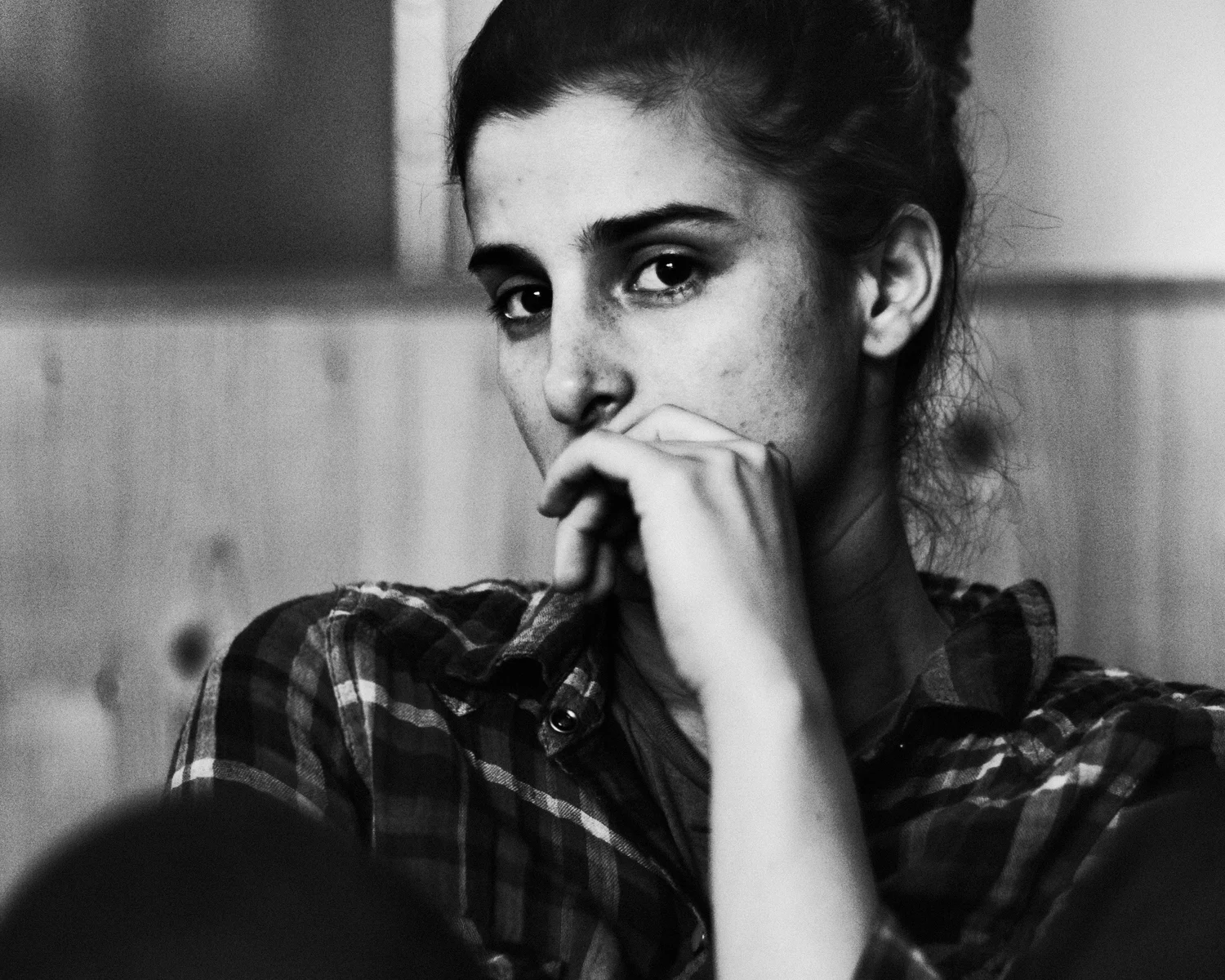
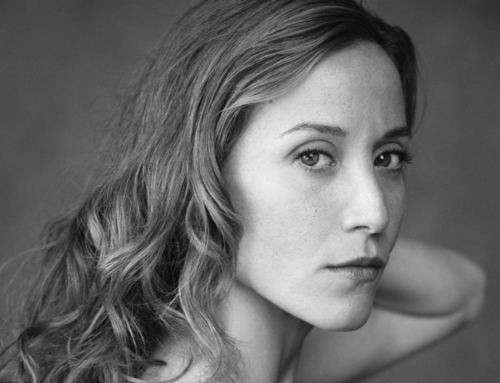
Photo: Franziska Strauss · Source: GALLIM
Introduction
Andrea Miller is a graduate of The Juilliard School and former dancer with Ohad Naharin’s Batsheva Ensemble. In 2006, Miller established Gallim Dance. The mission of Gallim Dance is to create, to play inside the imagination, to find juxtapositions of the mind and body that resonate in the soul, to investigate our limitations and pleasures, and to realize the endless human capacity for inspiration. Her work has been performed in the United States, Canada and Israel.
Miller has been selected as one of Dance Magazine’s “25 to Watch” 2009. Recent commissions include Repertory Dance Theater (UT), Zenon Dance Company (MN), Arts Umbrella (Vancouver), Hubbard Street 2 Choreographic Competition, and The Stella Adler Studio of Acting Artist in Residence (MAD AIR). Miller has choreographed for students at The Juilliard School, Alvin Ailey, and SUNY Purchase among others.
The conversation
When you were growing up did you always want to be a dancer, choreographer or did you want to do something else?
I think I knew that I wanted to be a dancer like professionally when I found out that it was a profession. You know I think it was just something like I was clearly very very drawn to every time I heard music, it‘s a run to it and I knew I was really attached to this early on and I think when I understood that it was a profession around like 11 I began focusing myself on wanting to go in that direction and actually choreography probably was soon after maybe 13 or 14.
What‘s your favorite thing to eat?
I like so much nutella and I like plain yoghurt and I like Pad See Ew.
Favorite books?
I can’t think of anything.
Favorite movies?
I like «Sunshine of the spotless mind» and I like «The lives of others» and I like «Silver lining playbook». I like «Birdman», it recently came out.
Favorite dance piece?
Oh my God, I have too many!
I really love this piece by Sascha Waltz, I have to look it up because it‘s a german name that I wouldn’t be able to… I cant even recall it but it was danced a few years ago.
I like « I don’t believe in outer space ». I think one of my favorite pieces actually I can totally name it is David St Pierre’s « Tenderness and a Brothel of Whores ».
I like dancers who …
Who laugh.
I am afraid of…
The water. I’m actually afraid of big waves. I‘m also afraid of flying.
A dance piece should…
Unsettle.
What‘s something you like to do other than choreographing?
I like sitting at the table with friends and family. I like sitting at the table where you could talk for a long time. I like that. I love sitting at the table and talking.
What‘s one of the happiest moments in your life?
Probably when my daughter was born and my son was born like oh my god it was such a relief, it‘s a joy that you don‘t even… although I‘m a happier mom since then too.
I think that when I did that first show, one of the first pieces that I kind of choreographed, I felt so… I came and I saw my family and it was really the first time that they really viewed my work as a choreographer and the idea that I wanted to choreograph. They saw something and they looked really happy and they liked the piece and I don‘t know what. It was like sharing that part of you with them and that being so positive kind of one of the biggest release and pleasure and happiness that I‘ve experienced.
One of your most unusual or coolest experiences?
I think one of my most unusual experiences was being near a volcano. It was in Hawaii. It just smelled and it breathed potential of death then. It‘s just that it didn‘t occur to me that the earth is alive in that way and I couldn‘t see it.
One of your most embarrassing moments?
I think she is the wife of a choreographer but she’s also the famous person. She’s like a very very famous dancer and she’s like maybe 60 and I was performing (14 :04) with Sandro Vacella (?)…. in Stockholm and there was this moment where you go and you sit in the audience and I kind of conversed with them in this audience were you‘re sitting until it start. So I was sitting with his woman and she was like «What it‘s like dancing?» I thought of explaining to her about how hard, it‘s like different because he uses improvisation and what improvisation even is and basically it was like explaining to her the history of dance and it turned out like she is this insanely famous dancer. It was Ana Laguna, the wife of Mats Ek. Everyone after the show came to me and they were like «Oh, you were sitting right next to Ana Laguna. What did you say? You guys were like talking for so long! » And I was like «Oh, I explained to her the history of modern dance and what improvisation is. » I think this is probably one of the most embarrassing.
Who has been in you you the most influential people in your life, in career?
I would definitely say that one of the most influential people was probably my mom. She‘s just like relentless when it comes to pushing what you think you can achieve and going further. She‘s just so demanding but at the same time so encouraging and supportive that I think that I really got to taste what it is to want to see the (17:27) _ that you have be fulfilled as much as you can. She gave me that curiosity, she gave me that courage.
One of the hardest things about doing this job?
Well, basic structural things are hard and then there‘s personal things that are hard. I mean structurally it‘s like finding and maintaining the right ecosystem for creativity and financial stability. It would really be great for us to have class every day and travel in this way or that way… So how do I like support the creativity but also make sure that you‘re not gonna just blow your bank and not be able to produce another year and not be able to support another year of contract. It‘s choices. You never know if this is the right sacrifices, if this is the right indulgence. It’s been a learning process, how to figure out this list of choices and I think on a personal level one of the hardest things is that as a dancer, I used to be surrounded by my friends and I wasn’t just surrounded by them, it’s like socially but also their body has been hugging and laying on top of each other and just you know being almost like little lions, like baby cubs that are playing with each other and sometimes when I need the transition, you can feel sometimes very lonely.
If you could change one thing about the dance world in America, what would you change?
I don‘t know if I would change the dance world particularly but I would make dance harder as everybody else’s life like a requirement in grade school. I’d make sure that everybody gets experience in moving and music and creativity and just like sweat and even going to performances. I think that that would change in the dance world. I think that the government, people would have more appreciation for it, give more money to it. I think the problem is the fact that in the dance world we are dancing for each other so people who get BFA‘s and then they end up getting BFA in dance but then let‘s say they go into computer technology or whatever so they are the ones who are coming into the dance shows so people are creating and performing for other sort of dance BFA‘s. And the point is to try and dance for people who don‘t know that insider language of dance.
What would you change in the real world?
I would change the idea that «I think, therefore I am» or «I fight, therefore I am» but just by like being born, you have the right. You own right to equality and you own right of being able to achieve things. You are who you are, that‘s what it is. Just being born is. And the thing is that no, we never really started it‘s not that for a long time ever ever anybody started at zero level you know like at zero point where we are all starting here but all race and see who gets there. No, there’s always bored or dismissed person ….(24:30)…. And so if people don‘t try to keep you to correct that allow for other people who didn‘t start in that place, given a chance, then we‘re basically always going to be promoting the opposition to get bigger and bigger and bigger and the distace between people to get bigger and bigger and bigger. It always have to be equalizing, always have to go back towards equal and not further and further away, make differences.
I would change that storyline that the Jews killed Jesus because I feel like there was such a chance for so many people to connect like he is such a revolutionary and it became disdain about like this religion, that religion and differences but if only like there could be a revolutionary who has good ideas for the world and that it would benefit everybody.
And actually I know exactly what I would do with my wand, I would take out suffering and death from the world.
Do you have some goals?
A lot of goals! I mean I want to be able to be a professional like have a long career in choreography as a woman and as a mother. I grew up with a lot of dancers who almost didn‘t have no children because their generation had to choose between having kids or dancing. Those are my teachers.
A question you want to know the answer to?
You want to know what? Why do we have to die?
A piece of advice for aspiring artists?
You just can’t stop. You cannot stop in any way like researching, finding failures after successes. Once you feel like you‘ve understand something that‘s gonna change and you gonna have to keep going so you just rest but eventually like picking yourself back up and getting excited and curious again.
About the writer
Read more about Armando and explore his contributions to the journal.
More interviews to explore.