Home / Interviews / Jamal Callender
Jamal Callender
Real Talk in Dance
Associate Dean and Director of Dance, The Juilliard School
Interview by Armando Braswell
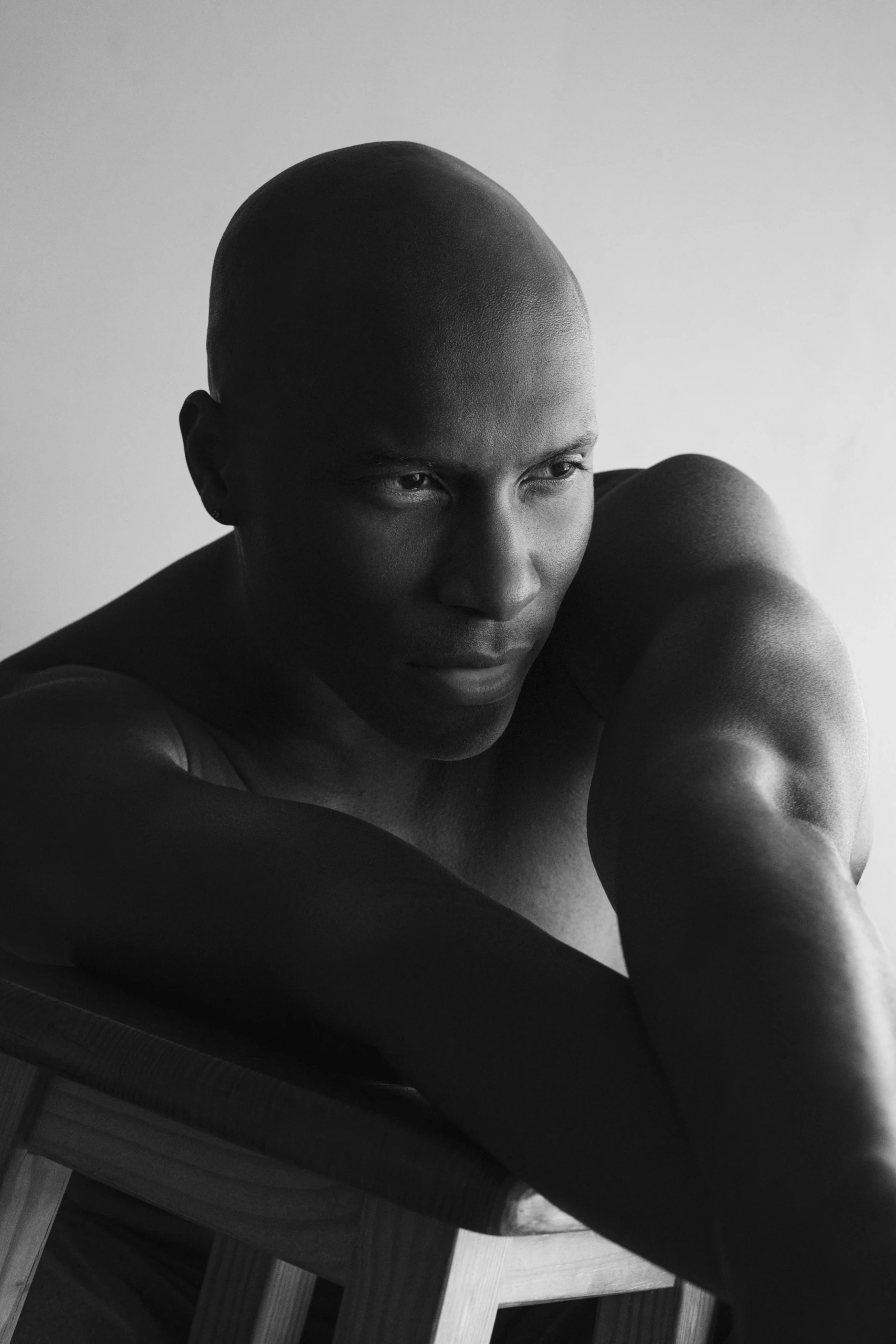
Photo: Alejandro Brito
The conversation
Interview with Jamal Callender
1. Full Circle
You graduated from Juilliard in 2009, and now you’ve returned as Associate Dean and Director of Dance. When you walk into the building now, what part of you still feels like the student Jamal—and what part feels completely different?
It’s quite insane to think that I graduated from Juilliard almost two decades ago!
I graduated just as the renovations to the building were coming to an end, so returning now, in many ways, it still feels the same. Every time I walk through the security gates and see students rushing to the elevators, I still find myself heading to the stairwell instead. Some habits never leave you!
What has changed is the responsibility. As a student, I only had to focus on myself. Now, I’m responsible for helping guide an entire division of over 90 students and more than 30 faculty members.
I know that when I walk up those stairs and enter the third floor, it’s game time! I have to be ready for anything and everything. It’s a thrill, and I genuinely love it.
2. What Juilliard Couldn’t Teach You
We both went through Juilliard and then had to figure out what being a professional dancer actually meant. What did the profession teach you that Juilliard couldn’t?
Armando, you are coming out with the questions!!!
Juilliard couldn’t teach me many things, because some lessons can only come from life itself. You grow, you experience, you make mistakes, and life teaches you along the way.
One of the biggest lessons the profession taught me was the importance of work-life balance. And to be honest, I didn’t truly begin to understand that until I decided to stop dancing full-time.
I had a moment when I really had to ask myself, “Who is Jamal when he isn’t a dancer?”
I went straight from Juilliard into the professional world, thankfully, despite graduating during a recession. From there, I continued dancing with five different companies, right through the pandemic.
Gosh, when I put it that way, I realize the profession also taught me resilience. How to keep going when the world around you isn’t necessarily working in your favor.
Although, one could argue that resilience was already part of who I was long before I arrived at Juilliard.
3. Looking Back at Your Training
If you could sit down with yourself during your first year at Juilliard, what would you tell that young dancer—and what would he probably refuse to believe?
Haha, wow!
I would tell first-year Jamal to really sink into the experience and absorb every bit of information being offered. Spend that extra free time in the studio, on your own, revisiting the corrections and ideas your teachers shared. Even when you think you’ve understood something, go back and explore it further. Apply it, question it, and discover what else is there.
Now, what wouldn’t he believe?
Back then, I didn’t fully believe that I was meant to be at Juilliard. I had been accepted off the waitlist, and somehow, I carried this feeling that I constantly needed to prove I belonged.
The interesting thing is that nobody made me feel that way. I had supportive classmates and faculty who believed in me. But my own mind wasn’t quite convinced.
I was so determined to show everyone that I deserved to be there that I sometimes forgot I had already earned my place.
4. The Definition of Success
When we were students, success could feel pretty simple: get into a great company, become a principal, work with important choreographers. Has your definition of a “successful dancer” changed?
Yes, absolutely. For me, success is increasingly about finding authorship in your artistry.
We spend four years inside the Juilliard building. It’s not a lot of time, but somehow it’s also an enormous amount of time. We study so many styles and techniques, work with incredible artists, and develop the ability to become chameleons. That in itself is a huge accomplishment.
But what about our own identity? Our own artistic voice?
I wish that had been championed more when I was a student. Although I also have to remember that I was only 18 to 21 years old, still trying to understand who I was as a young man, let alone who I was as an artist.
I think about the difference between copying the work and truly diving into the work. Understanding not just what you’re doing, but why you’re doing it. Becoming the author of your own storytelling.
To me, a successful dancer understands this, alongside all the things that have very little to do with the physical act of dancing.
How do you walk into a room? How do you hold space? How do you create community? How do you contribute to something greater than yourself?
These are all part of what makes a successful artist.
5. Preparing Dancers for This Industry
You’ve been a ballet dancer, contemporary dancer, choreographer, teacher, rehearsal director, creative director, commercial artist and now an administrator. Are conservatories still preparing dancers for a career model that doesn’t really exist anymore?
I do believe conservatories are still preparing dancers for careers in this profession. The tools and information I gathered at Juilliard have propelled me through every facet of my multi-hyphenated career.
I think about the Barbados Dance Project, which I founded in 2014. That initiative was born from my belief in the idea of the “artist as citizen,” something I first heard Joseph Polisi speak about during convocation in 2005.
I was a freshman! School hadn’t even properly started, and already a seed had been planted that would eventually grow into a project serving young artists on an island in the Caribbean.
That’s what I find so interesting about education. Sometimes the information you’re given doesn’t make sense immediately. The connections happen years later.
What has certainly changed is the influence of social media. When I started college, you needed a .edu email address just to create a Facebook account! Now, young dancers are navigating an industry where being a content creator can feel like another part of the job.
We see dancers from New York City Ballet, Dance Theatre of Harlem, and countless other companies building their own digital identities alongside their performance careers.
I also think we’re seeing the importance of more hybrid career models. Some companies are becoming more open to allowing dancers to take a leave of absence to tour with major recording artists, pursue independent creative projects, take a sabbatical, or even return to school. I think this is incredibly important because it acknowledges that dancers are not just dancers. They are artists with multiple interests, ambitions, and identities that deserve room to grow.
And perhaps this is where conservatories can continue to evolve, by preparing dancers not only to enter a company but also to navigate a career that may take many different forms.
So yes, the industry has changed, and conservatories need to remain aware of that. But I still believe the foundation of the training is valuable. The challenge is helping students understand how to take those skills and apply them to an industry that continues to evolve, while giving themselves permission to explore opportunities beyond the traditional career model.
6. Technique Versus Individuality
You’ve described the studio as a place for self-exploration and identity. But elite training can also be about correction, uniformity and fitting into an aesthetic. How do we develop extraordinary technique without training the individuality out of a dancer?
It’s interesting because I was speaking about this recently while teaching ballet to the second-year dancers at Juilliard.
I believe there is a way to be an individual within a collective.
We see this in the works we perform all the time. Think about an ensemble piece where everyone is dancing the same steps, with the same intention, yet the source of that movement might be completely different for each person.
The “why” and the “how” can have subtle variations, even when the choreography asks for unity.
I think it’s important that we don’t lose the individual in the pursuit of technical excellence.
When these dancers auditioned for Juilliard, we saw something unique in each of them. That spark, that individuality, that promise. It’s part of why they were invited into the school in the first place.
Our responsibility is to develop their technique while protecting and nurturing the very thing that made them stand out.
Technique should give dancers more freedom to express themselves, not less.
7. What Needs to Change?
Now that you’re sitting on the other side of the table at Juilliard, is there anything about traditional conservatory dance training that you think we simply need to stop doing?
Gosh, what do we need to stop doing?
I think for me it’s less about stopping things and more about constantly reexamining what we do and why we do it.
The dance field is continuously shifting and morphing, and as institutions, we have to keep our ears to the pulse of what’s happening.
But at the same time, I don’t think we should be afraid of holding on to traditions.
I think about classical works and how difficult it can be to discuss their importance when students aren’t necessarily seeing those works performed by companies today. There is often an eagerness to jump straight into contemporary work, which I completely understand.
But understanding the architecture of where these works come from is critical. Foundational knowledge gives us something to build upon, challenge, and eventually transform.
So I suppose what I’m saying is that institutions cannot remain inside an ivory tower. We need to be curious about what’s happening beyond our walls.
We have to be a bit like Princess Jasmine, willing to leave the palace and venture into the streets! Haha.
And for students, I would say that understanding the foundations of your craft is not about staying in the past. It’s about having the tools to move the art form forward.
8. The Body
Dance asks an enormous amount of the body, and dancers learn very early to push through things. Has your relationship with your own body changed since your performing years—and does that affect how you think young dancers should be trained?
Science continues to evolve, and with it, our understanding of the body.
When we were younger, we were often taught to push through. And I do believe there is something valuable in learning how to challenge yourself and discover new ceilings of possibility. But that has to happen with care, knowledge, and proper guidance.
Today, cross-training is much more widely respected within dance companies than it was earlier in my career. At the same time, the physical demands on dancers seem to have grown. Dancers are exploring greater ranges of movement and physical possibilities, which means we need to be even more attentive to how we care for the body.
Through my training as a Pilates teacher, and now my latest adventure of preparing to run my first marathon, I’m discovering just how important it is to challenge the body in different ways.
I also love playing tennis. I’m certainly no professional! Haha. But I enjoy using my body, my instrument, in ways that are different from dance.
I think there is tremendous value in that.
For a student, cross-training and body conditioning might seem like extra work on top of an already demanding schedule. But I believe developing a relationship with your body beyond the dance studio is essential.
The goal isn’t simply to push the body further. It’s to understand it better so that it can continue to serve you for years to come.
9. Europe Versus America
You’ve had substantial careers in both Europe and the United States. What do those two dance ecosystems misunderstand about each other?
HAHA! WELL…
In America, there can be this perception that European ballet companies are all about legs, feet, and beautiful lines. That the aesthetic is everything.
What an eye-opening experience it was when I joined companies in Europe and saw dancers at the ballet barre who didn’t necessarily fit that image at all. But put those same dancers onstage, and they would absolutely blow you away!
I also think there’s a fundamental difference in how the two ecosystems understand the place of art within society.
In America, it can be difficult to comprehend that many dance companies in Europe, particularly those attached to state and municipal theaters in Germany and Switzerland, receive substantial public funding. These companies are supported because there is an understanding that art is a necessity for the community, not simply a luxury.
And I think that’s also something Americans don’t always understand about why we don’t see these companies touring internationally as often. Many of these institutions have a responsibility to serve the communities that support them. Their dancers are part of a cultural ecosystem where performances are created not just for international recognition, but for the people who live in those cities and regions.
On the other hand, I think many dancers working within the European system struggle to comprehend the realities of employment in America.
The idea of not having a full-time contract, or moving from one job to another without the same level of security, can be difficult to imagine when you’re accustomed to a system that provides paid holidays and more structured employment protections.
I’ve had conversations with dancers in Europe who simply cannot wrap their heads around those realities.
Having worked in both ecosystems, I’ve come to appreciate how differently they function. Neither is without its challenges, but I think there is something incredibly valuable in the idea that art is not an extra offering to society. It is part of what makes a community whole.
10. Barbados: Access Versus Excellence
You created the Barbados Dance Project as a tuition-free initiative. Now you’re helping lead one of the world’s most selective performing-arts schools. What has working in those two very different environments taught you about access versus excellence? Do we sometimes falsely treat them as opposites?
These questions, Armando!!!
I don’t necessarily think access and excellence are opposites. In fact, through the Barbados Dance Project, I’ve seen how removing financial barriers can create an environment where excellence thrives.
By eliminating tuition for families, we’ve seen dancers become deeply invested in their training. There is a genuine desire to be in the studio, to learn, to grow, and to take advantage of the opportunity in front of them.
At Juilliard, I’m surrounded by incredibly talented young dancers. But my perspective is this: Yes, you’re talented. And what?
That’s the standard. You’re here!
My responsibility isn’t to constantly remind students how amazing they are. It’s to help them discover possibilities within themselves that they haven’t even imagined yet.
I often speak to students about the idea of peeling back the layers of an onion. Just when you think you’ve understood something, there is another layer waiting to be discovered. Go deeper into the subject, investigate the craft, ask more questions. Don’t be satisfied with simply knowing how to execute something beautifully. Understand why you’re doing it, where it comes from, and what you can bring to it.
My aim is to help cultivate curious human beings who also happen to be exceptionally talented dancers. Because I believe that’s what directors are looking for. Not simply someone who can execute the steps brilliantly, but someone who can enter a creative process with curiosity, intelligence, generosity, and a willingness to discover something new.
Sometimes, when you’re constantly told how wonderful you are, you can begin to feel as though you’ve arrived. But arrival is only the jumping-off point to the next level!
It’s like Mario World or Candy Crush. Just when you think you’ve conquered one level, there’s another waiting for you. Haha!
And I think that’s the beauty of artistic development. Excellence isn’t a destination. It’s a continuous process of investigation, discovery, and growth.
11. Leadership
You’ve spent most of your life being the person receiving the correction, learning the choreography or executing somebody else’s vision. What’s been hardest about becoming the person who has to make decisions that affect other artists?
I think one of the hardest things is questioning whether you’re giving people the right information and guidance.
Like anyone in a profession, I draw heavily from my own experiences. But when something falls outside my knowledge, I do the research.
I’m not afraid to say, “Let me get back to you.”
I think that’s incredibly important in leadership. You have to recognize when you have the answer and when you need to go and educate yourself.
There is something very special about being one of the people responsible for helping guide the next generation of dancers.
And yes, it can be scary because I’m right there with them, in real time, as they’re navigating their own journeys.
But I’m genuinely enjoying watching them grow, seeing them take risks, and seeing them develop trust in the process.
More than anything, I want them to know that I’m with them every step of the way.
Leadership, for me, isn’t about having every answer. It’s about being present, being accountable, and continuing to learn alongside the people you’re helping to guide.
12. The Future
Imagine we’re sitting together ten years from now. What would have to be different at Juilliard—or in dance education more broadly—for you to feel that this chapter of your career really mattered?
Ten years from now, if you and I are sitting together in Basel again, or perhaps another amazing city, I would hope that Juilliard has become tuition-free.
This vision, championed by Joseph Polisi and carried forward by Damian Woetzel, is something I’m deeply hopeful for.
I would also love to see us continue bringing diverse artistic voices from around the world into our studios, without the constraints that can sometimes limit those exchanges.
Given the current political climate and the tensions we’re experiencing globally, I think maintaining those artistic connections is more important than ever.
My hope is that the Dance Division continues to chart new territory and remain a leader in the field.
But I don’t think leadership is something you achieve once and then simply hold on to. It’s an everyday practice.
As an alum, I don’t want us to settle into the legacy of what the Dance Division has been. I see that legacy as a mantle we’ve been given, something we have a responsibility to carry forward while continuing to forge new paths.
I’m excited to see how Melissa, our Dean and Director, leads that journey and how I can contribute to it alongside her.
For me, if we can look back in ten years and see that we’ve expanded access, opened doors, challenged ourselves, and helped shape artists who are making meaningful contributions to the world, then I would feel that this chapter truly mattered.
13. Real Talk
After everything you’ve experienced in this profession, if a talented 17-year-old looked you in the eye today and said, “Jamal, should I become a dancer?”—what would you tell them?
YES, yes, and YES!
Younger Jamal was actually caught between football, soccer for my American friends, and dance. I laugh about it all the time because had my dad explained the financial possibilities of both careers, I might have reconsidered! Haha!
All jokes aside, I was made to dance.
The way I transform and express myself onstage, there is no other place where I can experience that same feeling.
I’ve danced around the world, literally. I’ve greeted people in different languages, experienced new cultures, built friendships across continents, and discovered parts of myself I might never have known. All because of dance.
So, to that 17-year-old with that spark in their eyes, I would absolutely say, go for it!
But be prepared to shed your skin more times than you can remember.
Cherish the time you have with your family, because once you begin your training or join a company, you’ll realize how quickly time passes and how much of it you spend away from the people you love.
Be a sponge. Take everything in.
Be an asset to the room. Respect everyone. Demand space for yourself while making space for others.
And remember, you have nothing to prove and everything to share.
Understand that this journey will not always be easy. Your pathway will be your own, and it may look nothing like someone else’s.
Excellence and rigor live in the process, not simply in the outcome.
This is the work of an artist.
Photo journal
More interviews to explore.


About the writer.
Armando Braswell ↗ — read his biography and explore more conversations.

Leave A Comment